Artificial intelligence has changed how we create and edit videos. One of the most talked-about innovations in recent years is the AI face swap video model. What once required advanced visual effects teams and expensive software can now be done with smart algorithms trained on large datasets.
But how does it actually work?
Behind every smooth face swap lies a combination of computer vision, deep learning, facial mapping, and video rendering techniques. In this article, we break down the technical process step by step so you can understand what happens behind the scenes when a face is replaced in a video.
What Is an AI Face Swap Video?
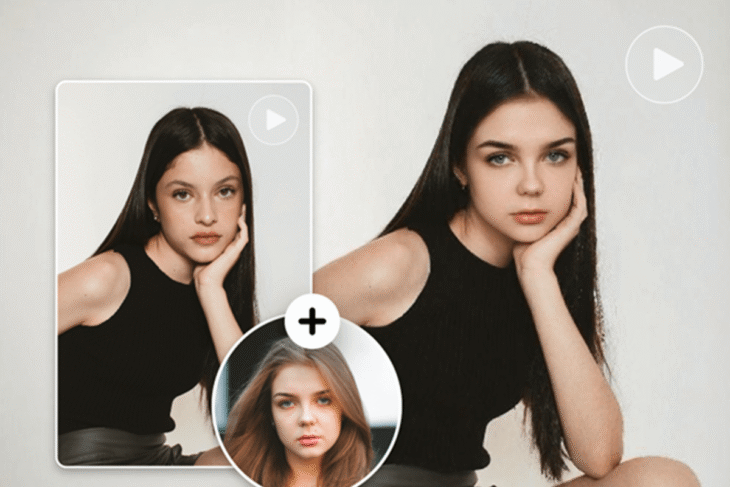
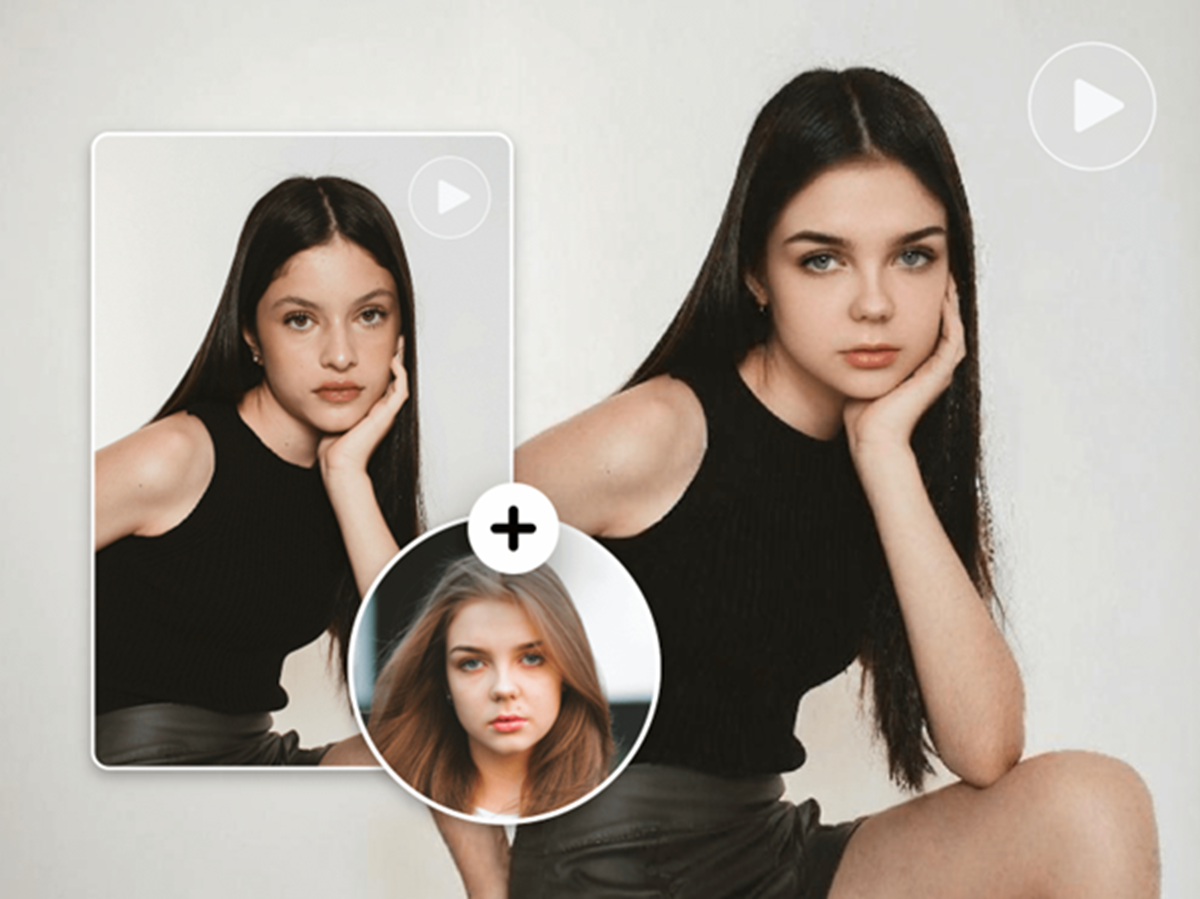
An AI face swap video uses machine learning models to replace one person’s face with another in a moving video. The system detects facial features, tracks movement frame by frame, and blends a new face in a way that looks natural.
Modern face swap systems are built using techniques popularized in the field of deep learning and neural networks. The concept gained attention with the rise of Deepfake technology, where AI models were trained to generate highly realistic human faces.
However, today’s tools are more refined. They focus on controlled, creative applications such as content creation, marketing videos, storytelling, and social media clips.
Step 1: Face Detection
The first step in the process is face detection.
The AI model scans each frame of the video and identifies where the face is located. This is done using computer vision models trained to recognize:
- Eyes
- Nose
- Mouth
- Jawline
- Facial contours
Most systems use convolutional neural networks inspired by early breakthroughs like OpenCV, which helped standardize face detection pipelines.
At this stage, the AI simply answers one question: Where is the face in this frame?
Step 2: Facial Landmark Mapping
Once the face is detected, the next step is mapping facial landmarks.
A typical AI model identifies 60 to 100 key points across the face. These points define:
- Eye corners
- Eyebrow curves
- Nose bridge
- Lip edges
- Chin position
This step is crucial because it allows the model to understand facial geometry. Without accurate landmark detection, the swapped face would look misaligned or distorted.
The system also tracks how these landmarks move over time. That means if the person turns their head or smiles, the AI tracks those changes across frames.
Step 3: Feature Extraction Using Deep Learning
Now comes the heavy lifting.
The AI extracts facial features from both:
- The source face (the one being inserted)
- The target face (the one being replaced)
This process often uses generative models such as Generative Adversarial Networks or encoder-decoder neural architectures.
Here’s how it works in simple terms:
- The encoder converts the face into mathematical data.
- The decoder reconstructs a face from that data.
- The system learns patterns like skin tone, lighting, texture, and expression.
Through training on thousands or millions of images, the model learns how human faces behave under different lighting conditions and angles.
Step 4: Expression and Pose Matching
One of the hardest parts of an AI face swap video is maintaining realism.
If the original person tilts their head, laughs, or raises an eyebrow, the inserted face must do the same. This requires:
- Pose estimation
- Expression transfer
- Temporal consistency
Advanced models use motion tracking algorithms to ensure that the swapped face follows natural muscle movement. This prevents the “floating mask” effect seen in early deepfake videos.
Modern systems are heavily inspired by frameworks such as TensorFlow, which enable large-scale neural training for tasks like facial animation.
Step 5: Skin Tone and Lighting Adjustment
Even if the face shape is correct, lighting mismatches can ruin realism.
The AI analyzes:
- Brightness
- Shadow direction
- Color temperature
- Environmental reflections
It then adjusts the inserted face so it blends seamlessly into the scene.
This often involves color correction models and image harmonization techniques. The system predicts how light would naturally fall on the new face inside that environment.
Step 6: Blending and Edge Refinement
Now the new face is placed onto the original frame.
But this is not a simple copy-paste.
The AI performs:
- Seamless cloning
- Feathering around edges
- Texture blending
- Noise matching
It ensures that skin pores, wrinkles, and even subtle compression artifacts match the rest of the video.
At this stage, frame-level precision matters. Any sharp edge or unnatural boundary would make the swap obvious.
Step 7: Frame-by-Frame Processing and Temporal Smoothing
Videos are not static images. They are sequences of frames.
A typical video contains:
- 24 frames per second
- 30 frames per second
- Or even 60 frames per second
That means a 10-second clip may contain hundreds of frames.
The AI processes each frame individually, but it also uses temporal smoothing algorithms to ensure consistency between frames. Without this, you would see flickering or face jitter.
Temporal smoothing ensures:
- Stable facial identity
- Smooth motion
- Consistent texture
Step 8: Final Rendering and Compression
After the AI finishes processing all frames, the video is reassembled.
Rendering involves:
- Encoding the processed frames
- Reapplying audio tracks
- Compressing the file
The result is a complete AI face swap video that appears realistic and fluid.
Modern AI video platforms combine this process with additional features like script generation, voiceovers, subtitles, and scene creation. This makes face swap just one part of a broader creative workflow.
For example, an AI video app like invideo integrate intelligent editing systems that simplify complex AI processes into guided creative tools. Instead of manually managing neural networks or training datasets, creators can focus on storytelling while the system handles the technical layers in the background
Invideo Knowledge Bank.
Training the AI Model: The Hidden Foundation
Everything described above depends on training data.
To create accurate face swaps, models are trained on:
- Large datasets of human faces
- Various lighting conditions
- Different ethnicities and age groups
- Multiple facial expressions
The more diverse the data, the better the model performs.
Training involves:
- Forward propagation
- Error calculation
- Backpropagation
- Weight adjustment
This process repeats millions of times until the model can generate convincing facial reconstructions.
Hardware Requirements Behind the Scenes
High-quality face swap models require strong hardware during training:
- GPUs for parallel computation
- High memory systems
- Optimized neural libraries
During real-time application, optimized inference engines reduce the computational load so users do not need enterprise-level hardware.
Cloud-based AI systems make this even more accessible by handling heavy computation remotely.
Ethical Considerations and Responsible Use
Because the technology is powerful, responsible use is essential.
Face swap tools should be used for:
- Creative storytelling
- Parody and entertainment
- Marketing and advertising
- Educational demonstrations
They should not be used to mislead, impersonate, or manipulate others.
Many modern platforms implement safeguards such as watermarking or usage policies to encourage ethical application.
Why AI Face Swap Video Models Continue to Improve
Several factors are driving improvement:
- Better neural architectures
- Larger training datasets
- Improved GPU performance
- Advanced real-time inference models
New research in facial motion transfer and neural rendering continues to push the boundaries of realism.
We are moving from simple face replacement toward full identity transformation that includes voice, expression, and even body language.
The Bigger Picture: AI in Video Creation
Face swap is just one component in the evolving world of AI video creation.
Today’s AI systems can:
- Generate scripts from prompts
- Create realistic voice-overs
- Add subtitles automatically
- Generate scenes using text
The goal is not just technical power, but simplicity. Complex AI models are increasingly packaged into intuitive tools that remove friction from the creative process.
Instead of learning advanced editing software, creators can describe what they want. The AI handles detection, mapping, blending, rendering, and final output behind the scenes.
Final Thoughts
The technical process behind an AI face swap video may sound complex, and in truth, it is built on advanced mathematics and deep learning systems. From face detection and landmark mapping to neural generation and temporal smoothing, multiple layers work together to create seamless results.
Yet the most exciting part is not the complexity. It is the accessibility.
What once required a professional VFX team can now be achieved using problem solving tools that automate the entire workflow. As neural models become more refined, we can expect even greater realism, faster processing, and more creative control.
AI face swap technology represents a powerful example of how artificial intelligence is reshaping digital storytelling, giving creators new ways to experiment, innovate, and communicate visually.